
Shaping Mableton through Vision, Discipline and Community Trust

Thank you for Subscribing to Gov Business Review Weekly Brief
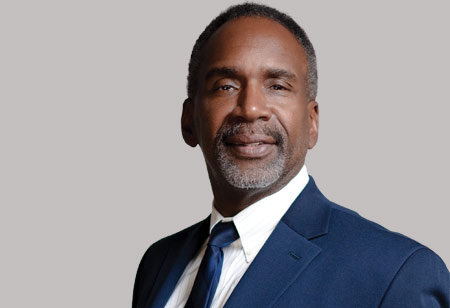
William Tanks, City Manager of Mableton, brings over three decades of public service leadership. A U.S. Navy veteran and former Deputy Fire Chief of Operations, Tanks has led large-scale public systems, served in senior county and city executive roles, and now oversees the foundational growth of Mableton as its first City Manager.
Across the interview, Tanks consistently stresses that effective city leadership begins with serving people. From frontline service to city management, he underscores the importance of listening and trust, using practical judgment to build resilient teams and deliver real value to everyday citizens. AT A GLANCE: • Service-Led Leadership - Grounding city management in frontline experience, with a people-first approach shaped by military, fire service and executive public service. • People Before Process - Building resilient teams by valuing trust, listening, accountability and clear expectations over rigid procedures. • Practical Innovation - Challenging habit-driven practices while respecting legal requirements, using purposeful innovation to improve efficiency without compromising quality or public trust. Professional Evolution: From Military Service to City Management Service has been the constant thread in my career. After graduating from high school, I joined the U.S. Navy and learned the fundamentals of teamwork and responsibility while deploying during the early 1990s. Extending that commitment to my local community, I became a county firefighter and quickly found my calling. “Sometimes innovation simply means letting change show us where efficiency can improve service. And in those moments, innovation doesn’t compete with tradition. It outweighs it, because the goal is always to serve our citizens better.” Over 27 years in the fire service, I worked across training, response and operations, ultimately serving as Deputy Fire Chief for Operations. Leading multiple stations, personnel and equipment taught me how to manage complex systems under sustained pressure. Alongside that work, I continued serving as a Navy reservist and advanced to Chief Petty Officer, reinforcing leadership through practice rather than theory. After retiring from the fire service, I earned a master’s degree in accounting and an MBA. The county soon appointed me to an executive role overseeing six public service departments, working closely with the County Manager. That experience led to city-level leadership roles, including Executive Director of Public Services in Powder Springs, where we strengthened staffing, improved morale and earned agency-of-the-year recognition. Making a difference in the everyday lives of citizens is what drew me in—and what continues to guide how I lead. Leadership Philosophy: Valuing People over Rigid Processes From leading departments in Powder Springs and now building a city from the ground up in Mableton, one principle has consistently shaped how I lead—people come before process. When we formed the City of Mableton, our organization grew from just a handful of employees to more than fifty in a single year. That kind of growth only succeeds when leaders focus first on the people doing the work. As growth accelerated, I saw how easily organizations can retreat into procedures and controls. But lasting performance comes from creating an environment where people feel respected, supported and challenged. When that foundation is in place, people step up, solve problems and take ownership of outcomes. That approach was shaped early in my Navy career. Working with young sailors, I learned that performance cannot be forced; it must be earned. It is built through trust, shared purpose and clear expectations. Balancing Tradition and Innovation: Challenge, Adapt and Improve Change is constant in local government, and that’s why, for me, staying flexible has become essential. Innovation starts with listening. It comes from creating space to ask better questions about how we operate and whether the way we have always done something still makes sense. I don’t see innovation as balancing old practices against new ones. I see it as challenging the work itself. If what we are doing works, I don’t believe in making it worse. But if we can save time, improve the environment or shorten a process without sacrificing quality, then we owe it to the community to do it better. Quality is the non-negotiable. Time matters, but never at the expense of doing the job right. As long as a new approach is not illegal, unethical or improper, I’m open to it. Often, the real question isn’t whether a practice is traditional, but why it exists in the first place. Is it driven by law, regulation or something we can’t control? If a requirement says records must be kept for five years, that’s the rule. But if it doesn’t say they must remain on paper, then we digitize, archive and move forward in a way that saves space and time while protecting the record. Sometimes innovation simply means letting change show us where efficiency can improve service. And in those moments, innovation doesn’t compete with tradition. It outweighs it, because the goal is always to serve our citizens better. Emerging City Priorities: Balancing Demand and Resources Every city operates within its own mix of opportunity and constraint, and for us, it begins with supply and demand. The city was formed on the premise that we would not assess a real property tax on residents. As the largest city in Cobb County by land area and population, that choice shapes nearly every priority we manage. When you ask what challenges matter most, it comes down to meeting citizen expectations while working within the limits of available resources. That reality forces creativity. When residents request additional services, they don’t want to hear about tax structures. They want solutions. We explore alternative revenue sources, including owning and leasing property, as well as utilizing development authorities, special service districts and tax allocation districts that can support the general fund without burdening taxpayers. At the same time, we must be honest that more services require more resources, whether in terms of staffing or funding. The real test is balancing demand with capacity without compromising quality. That often means making tough, transparent decisions and taking them back to the public. It requires vision, resilience and the willingness to stay the course through distractions and pressure. There’s no magic wand, but when the work is done and the city moves forward, the result is worth it. Advice for Peers: Always Listen If you listen, you learn. If you talk more than you listen, you miss what really matters. That lesson has shaped my entire career. As a city manager, I cannot lead people I do not genuinely care about. Leadership starts with caring about the people you serve and the people you work alongside, not just the processes that surround them. At the same time, leadership requires balance. A good city manager has to be both a leader and a manager. You are responsible for people, programs and public resources. That means setting clear goals, monitoring progress and holding people accountable while also giving them the support they need to succeed. When you work with elected officials, you have to set realistic expectations, know when to say no and know when to say we will find a way. Growth never stops. I remain active in leadership and government excellence programs today because development does not end with a title. I stay curious. I keep sharpening my skills. I help others succeed along the way. When I invest in people and empower them to grow, the results speak for themselves.I agree We use cookies on this website to enhance your user experience. By clicking any link on this page you are giving your consent for us to set cookies. More info

However, if you would like to share the information in this article, you may use the link below: